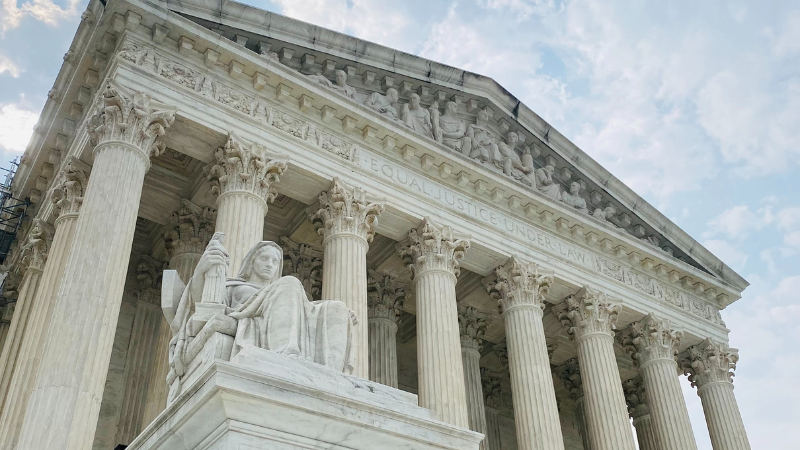
On Monday, March 2nd, the U.S. Supreme Court reinstated a federal district court ruling allowing California parents to be informed when their children express gender nonconformity or socially transition at school. The decision, issued on the court’s emergency docket, found that the state’s policies likely infringe on parents’ constitutional rights to direct the upbringing and education of their children, as well as their right to freely exercise their religion.
The case, Mirabelli v. Bonta, originated in 2023 when two teachers and several parents challenged guidance from the California Department of Education, which limited disclosure of students’ gender identity without the student’s consent. The district court ruled in favor of the plaintiffs, but a federal appeals court temporarily blocked the order, prompting the Supreme Court intervention.
In a brief majority ruling, the court concluded that California’s policies “substantially interfere with the right of parents to guide the religious development of their children.” The ruling emphasized that parents hold primary authority over decisions regarding their children’s education and mental health and that the state cannot override those rights without meeting the strictest constitutional scrutiny.
In a concurring opinion, Justice Amy Coney Barrett, joined by Chief Justice John Roberts and Justice Brett Kavanaugh, emphasized that the decision was preliminary and intended to prevent irreparable harm, arguing that prolonged enforcement of the policies could exclude parents from critical decisions about their children’s well-being.
Justice Elena Kagan and Justice Ketanji Brown Jackson dissented, criticizing the court’s choice to resolve the matter on an emergency docket without full briefing or oral argument. Justice Sonia Sotomayor indicated she would have denied both the parents’ and teachers’ requests, while Justice Clarence Thomas and Justice Samuel Alito would have granted relief to the teachers.
California’s new law, Assembly Bill 1955, which limits mandatory disclosure of students’ gender identity, was not directly addressed in the Supreme Court ruling, and further litigation in the 9th Circuit is expected to clarify the broader legal implications.